
Python Break Statement: Immediate Loop Termination & Control Flow
The break statement is a loop control keyword in Python that terminates the execution of the surrounding for or while loop immediately. The moment Python encounters break, it halts further iterations and jumps control directly to the first line of code outside the loop block.
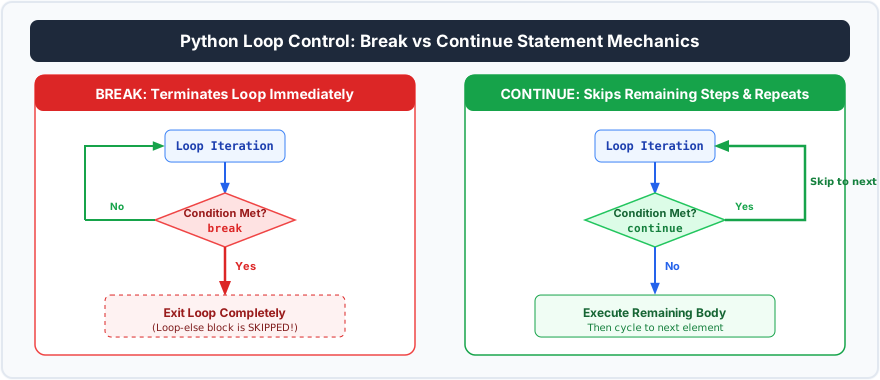
Figure 24.1: Break statement immediately breaking out of the loop and skipping any loop-else blocks.
1. Break in a For Loop Example
# Searching for a specific character:
for char in "veewom":
    if char == "w":
        print(f"Character '{char}' encountered! Breaking loop.")
        break
    print("Inspecting character:", char)

print("Loop finished execution.")
Output:
Inspecting character: v
Inspecting character: e
Inspecting character: e
Character 'w' encountered! Breaking loop.
Loop finished execution.
2. Break in a While Loop (Sentinel User Input)
# Break on sentinel exit command
while True:
    command = input("Enter command (or type 'quit' to exit): ").strip()
    if command.lower() == "quit":
        print("Closing application...")
        break
    print(f"Executing command: {command}")
Frequently Asked Questions (FAQ)
Can break be used outside a loop?
No. Using
break outside a for or while loop causes a SyntaxError: 'break' outside loop.


You may also like this!
© Veewom.com. | Managed by PinePL
