
C++ Dynamic Memory Allocation: Heap Management, new/delete & Leak Prevention
Stack memory is fast but fixed in size. When your program needs to allocate memory whose size is only known at runtime (e.g., loading a 4K game texture or a 10,000-row database query), you must allocate memory dynamically on the Heap.
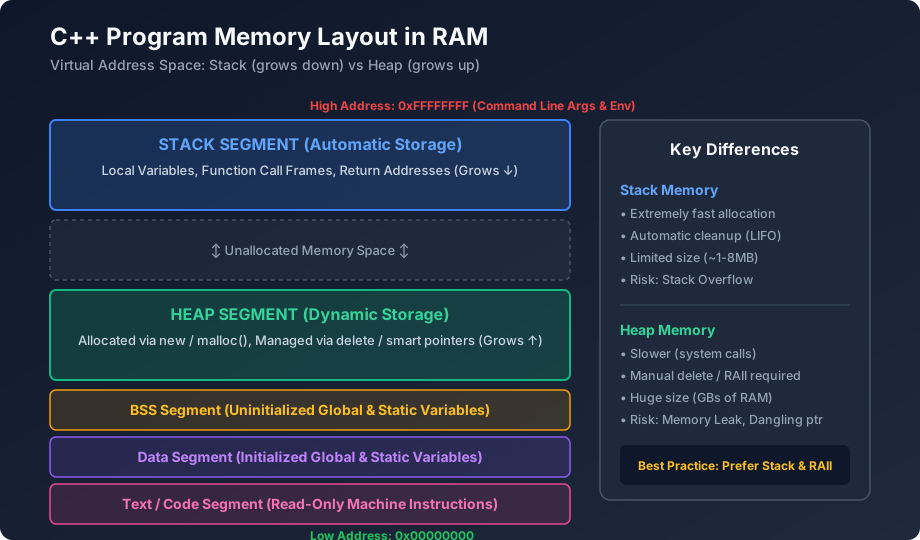
The new and delete Operators
#include <iostream>

int main() {
    // 1. Allocate a single integer on the Heap
    int* ptr = new int(250);
    std::cout << "Heap value: " << *ptr << "\n";

    delete ptr;         // Deallocate heap memory
    ptr = nullptr;      // Prevent dangling pointer!

    // 2. Allocate a dynamic array of integers on the Heap
    int size = 5;
    int* dynamicArr = new int[size]{10, 20, 30, 40, 50};

    // CRITICAL: Always use delete[] for arrays!
    delete[] dynamicArr;
    dynamicArr = nullptr;

    return 0;
}
A memory leak occurs when heap memory is allocated with new, but the pointer holding its address is lost or reassigned without calling delete. The memory remains occupied until the operating system shuts down the process. In servers running 24/7, memory leaks cause the system to crash with std::bad_alloc.
Frequently Asked Questions (FAQ) - Student & Interview Review
Q1. What is the difference between new/delete in C++ and malloc/free in C?
Q2. What catastrophic bug happens if you free an array with 'delete' instead of 'delete[]'?
Explore Related C++ Tutorials & Next Steps
Boost your C++ proficiency by studying these closely connected core modules:
Modern automated heap management (unique_ptr).
Binding dynamic resources to deterministic scope destructors.
Handling std::bad_alloc during out-of-memory errors.


You may also like this!
© Veewom.com. | Managed by PinePL
