
C++ Object-Oriented Programming: The Four Pillars Master Guide
Object-Oriented Programming (OOP) is a software design paradigm organized around Objects (which contain data attributes) and Classes (blueprints defining behavior). C++ is a fully featured object-oriented language built upon Four Core Pillars.
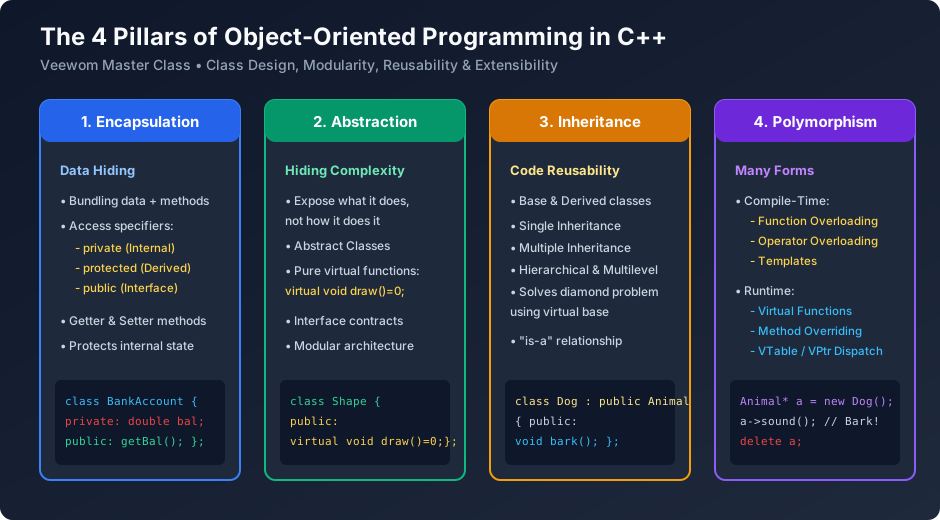
Figure 9: The Four Pillars of Modern C++ OOP Architecture
The 4 Pillars Breakdown:
- Encapsulation: Bundling data fields and member functions together inside a class, protecting the internal state from unauthorized external alteration using
privateaccess. - Abstraction: Exposing only the essential interface to the user while concealing the internal mechanics through abstract classes and pure virtual functions (
virtual void draw() = 0;). - Inheritance: Reusing and extending existing class designs into specialized child classes (e.g.,
class ElectricCar : public Car), modeling an "is-a" relationship. - Polymorphism: Allowing objects of different types to be treated through a unified base class pointer, dynamically selecting the correct method at runtime via virtual functions.
Frequently Asked Questions (FAQ) - Student & Interview Review
Q1. Why was Object-Oriented Programming added to C to create C++?
Procedural programming in C separated data from functions, which led to fragile global state in large software. OOP bundles data and functions together into cohesive 'objects', establishing clear ownership, encapsulation, and reuse.
Q2. What is the difference between Abstraction and Encapsulation?
Encapsulation is the bundling of data and methods into a single class while restricting direct access using private/protected specifiers (Data Hiding). Abstraction is the act of hiding complex implementation details and showing only the essential public interface (via abstract classes and pure virtual functions).
Explore Related C++ Tutorials & Next Steps
Boost your C++ proficiency by studying these closely connected core modules:
Classes & Objects
Constructing classes and instantiating objects.
C++ Inheritance
Base and derived class hierarchies.
C++ Polymorphism
Dynamic method overriding and virtual functions.


You may also like this!
© Veewom.com. | Managed by PinePL
