
C++ std::vector: Dynamic Array Internals, Capacity Growth & Optimization
std::vector is the default, go-to sequence container in modern C++. It encapsulates a dynamic array that automatically resizes itself on the heap when elements are added.
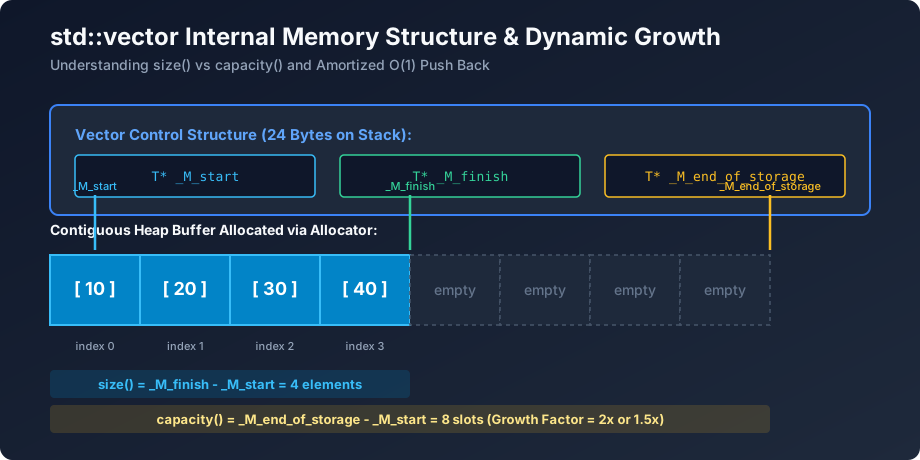
Figure 13: std::vector Internal Pointers (_M_start, _M_finish, _M_end_of_storage) & Growth
Vector Operations & Performance Optimization
#include <iostream>
#include <vector>

int main() {
    std::vector<int> vec;

    // PERFORMANCE TIP: Reserve space to avoid reallocations!
    vec.reserve(100);

    vec.push_back(10);
    vec.push_back(20);
    vec.emplace_back(30); // In-place construct

    std::cout << "Size:     " << vec.size() << "\n";     // 3 elements
    std::cout << "Capacity: " << vec.capacity() << "\n"; // 100 slots reserved!

    return 0;
}
Frequently Asked Questions (FAQ) - Student & Interview Review
Q1. What is the difference between reserve() and resize() in std::vector?
reserve(N) allocates enough heap memory to hold at least N elements WITHOUT altering the vector's size() or constructing objects. resize(N) actually changes the vector's size(), default-constructing new elements if N > size().
Q2. Why is emplace_back() faster than push_back()?
push_back() constructs a temporary object and then copies or moves it into the vector's memory buffer. emplace_back() forwards arguments directly to the constructor in-place inside the vector's buffer, completely eliminating temporary object creation.
Explore Related C++ Tutorials & Next Steps
Boost your C++ proficiency by studying these closely connected core modules:
STL Overview
Understanding how vector fits into STL sequence containers.
STL Iterators
Traversing vectors using iterators.
Move Semantics
How vector moves elements during growth.


You may also like this!
© Veewom.com. | Managed by PinePL
