
C++ Multithreading: std::thread, C++20 std::jthread & Parallel Hardware Execution
Modern CPUs contain multiple physical cores. Multithreading allows your C++ program to execute multiple operations simultaneously in parallel, dramatically accelerating computational performance.
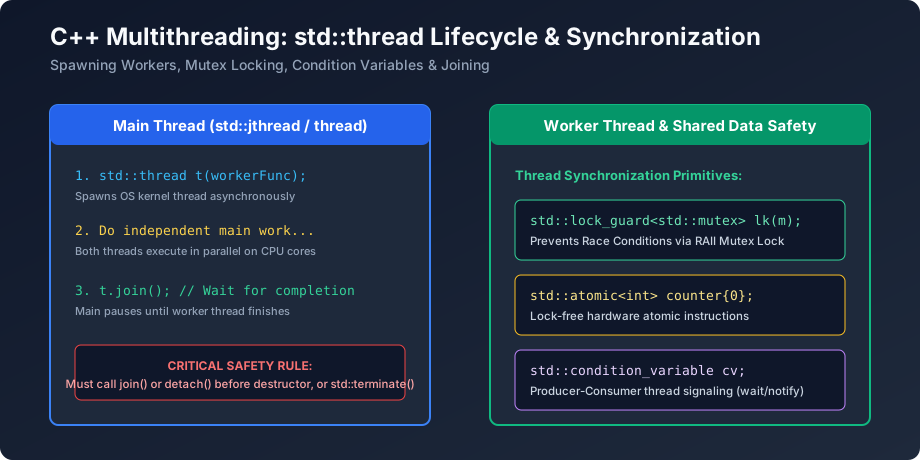
Figure 18: Thread Lifecycle Architecture: Spawning, Parallel Execution, and Safe Joining
Parallel Processing with Modern C++20 std::jthread
#include <iostream>
#include <thread>
#include <chrono>

void heavyComputation(int workerId, int iterations) {
    std::cout << "Worker " << workerId << " started on CPU core.\n";
    std::this_thread::sleep_for(std::chrono::milliseconds(500));
    std::cout << "Worker " << workerId << " finished " << iterations << " tasks!\n";
}

int main() {
    std::cout << "Hardware Cores Available: " << std::thread::hardware_concurrency() << "\n";

    // C++20 std::jthread automatically joins on scope exit!
    std::jthread t1(heavyComputation, 1, 5000);
    std::jthread t2(heavyComputation, 2, 8000);

    std::cout << "Main thread continuing other work...\n";
    // Both t1 and t2 join safely and cleanly right here!
    return 0;
}
Frequently Asked Questions (FAQ) - Student & Interview Review
Q1. Why is std::jthread (introduced in C++20) preferred over std::thread?
std::thread crashes the program via std::terminate() if its destructor runs while the thread is still joinable. C++20 std::jthread ('joining thread') automatically calls join() in its destructor and provides cooperative cancellation tokens (std::stop_token).
Q2. What is the difference between t.join() and t.detach()?
t.join() blocks the calling thread until the worker thread finishes execution. t.detach() separates the thread from the C++ object, allowing it to run independently in the background (daemon thread).
Explore Related C++ Tutorials & Next Steps
Boost your C++ proficiency by studying these closely connected core modules:
Mutex & Synchronization
Protecting shared data from race conditions.
Atomic Operations
Lock-free hardware atomic variables.
C++ Coroutines
Cooperative multitasking vs kernel threads.


You may also like this!
© Veewom.com. | Managed by PinePL
